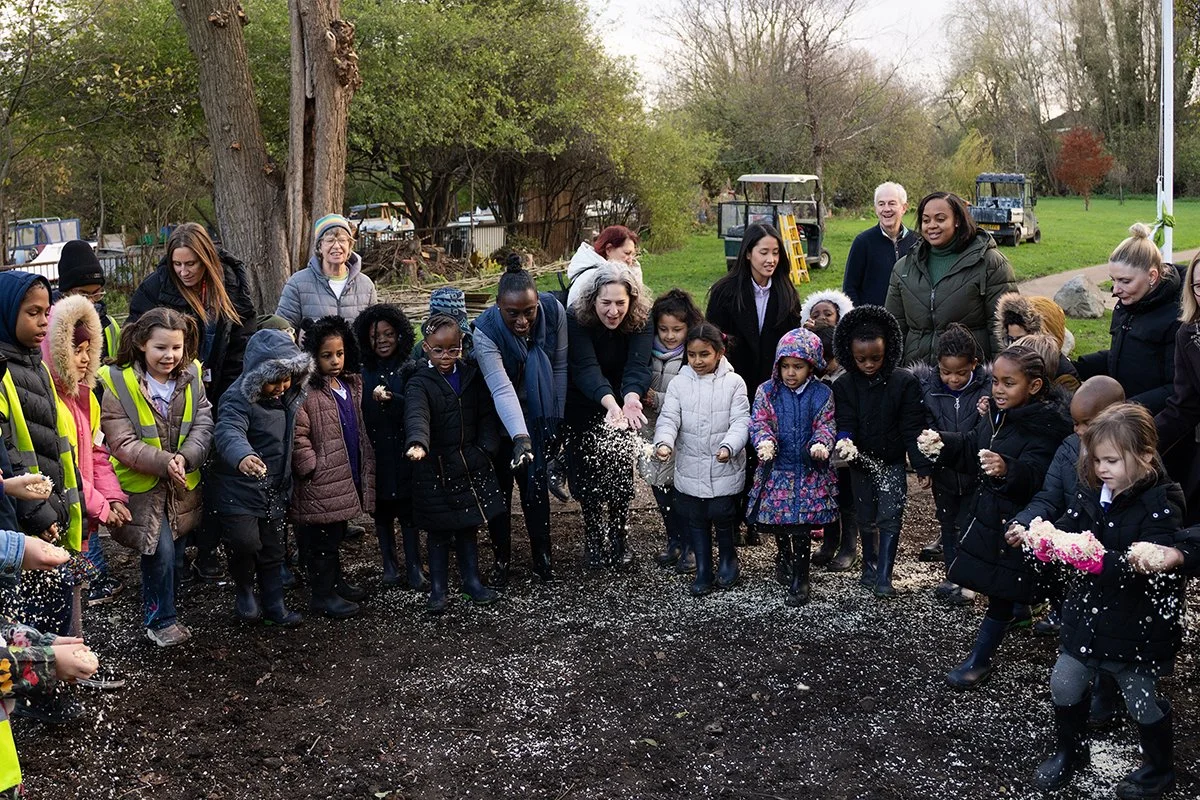
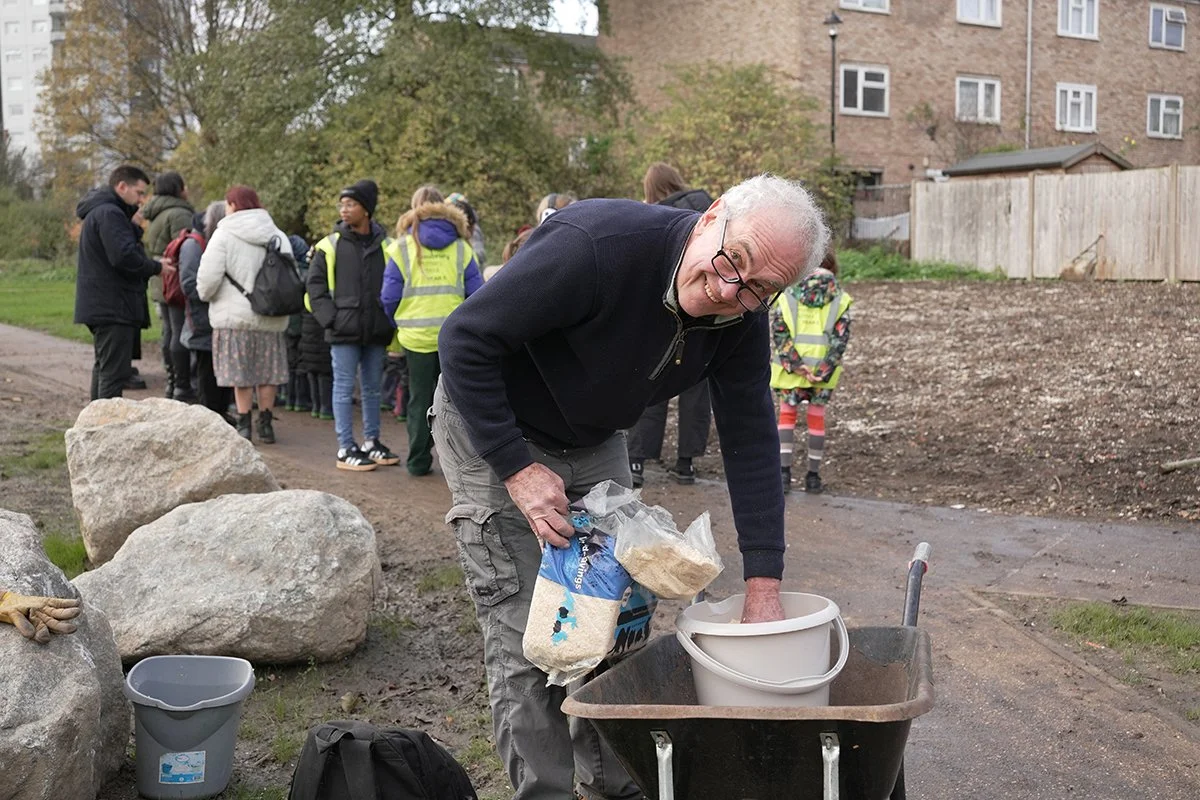
On a brisk but intermittently sunny November morning I strolled across Hackney’s Daubney Fields to find our Community Ecologist Gerry and volunteer Tree scarifying a planting bed at the corner of the park by the children’s centre. In this distance a parade of year 1s from Kingsmead Primary weaved their way along one of the park's newly laid paths past Hackney’s largest ever bee bank. (12m). A few meters away a gaggle of council workers, led by Bruce Iriving, Parks Development Manager, appeared to be trying to answer the question “how many people does it take to put up a flag?”
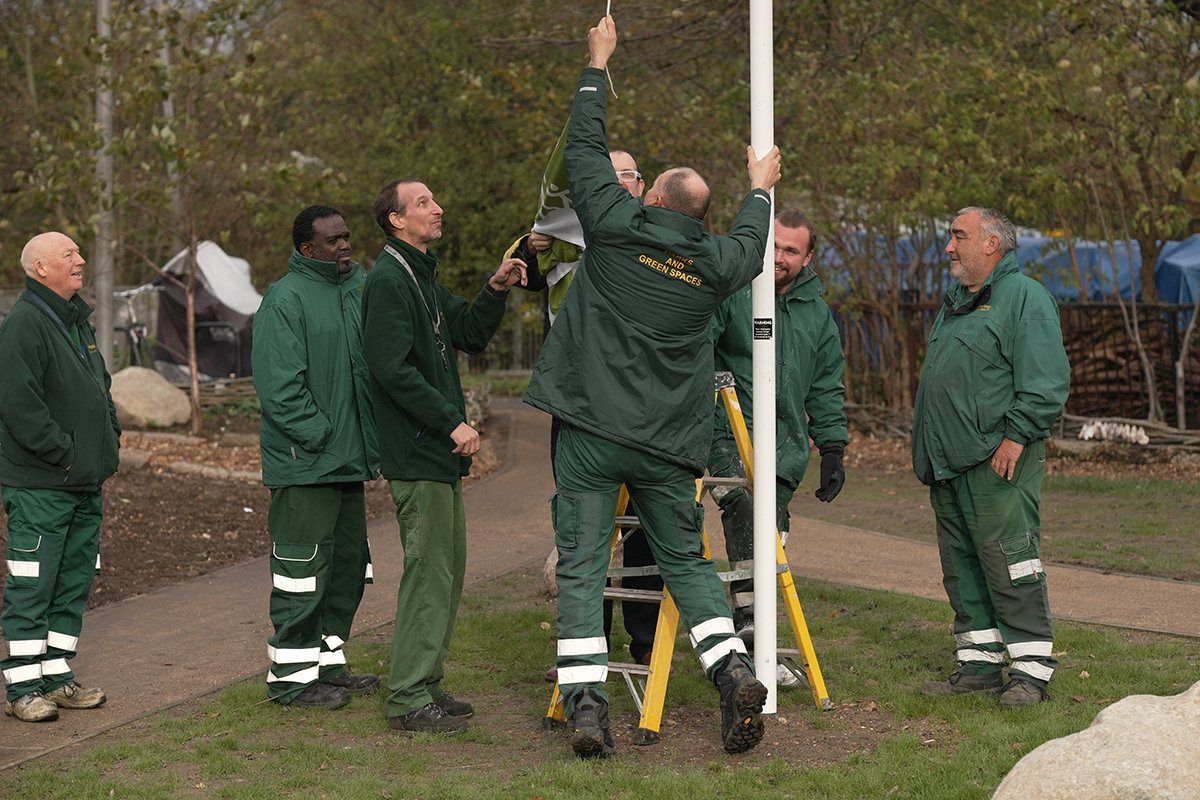
The answer would reveal itself within the hour as we were joined by Daubeney School’s eco team, ward Councillors Sharon Patrick, Lynne Troughton, Ali Sadek, Kingsmead’s Head Evelyn Deeney, Deputy Mayor and Cabinet Member for Children’s Services and Young People Anntoinette Bramble and gliding in majestically on two wheels, Mayor of Hackney, Caroline Woodley.
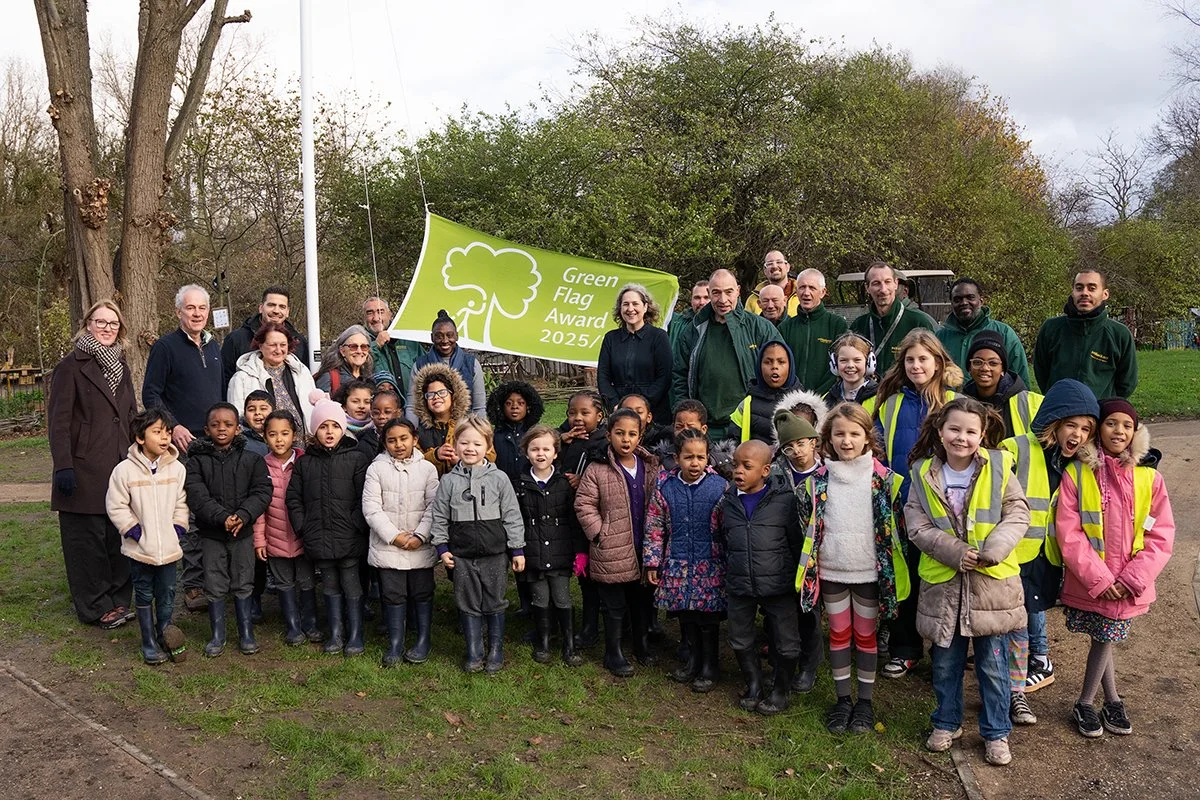
It turns out it takes a village, or ward if you prefer, to raise this particular flag because it was Hackney’s 33rd Green Flag award.
But we weren’t there just for pomp and ceremony. There was the serious business of sowing Hackney’s first chalk Wildflower meadow. This was delivered by the children from Kingsmead and Daubeney Primary Schools with military precision. Stomping the seeds into the earth being a particular highlight. The councillors and Mayor did of course join in but the children, now well versed in language and action of community rewilding proved their expertise.
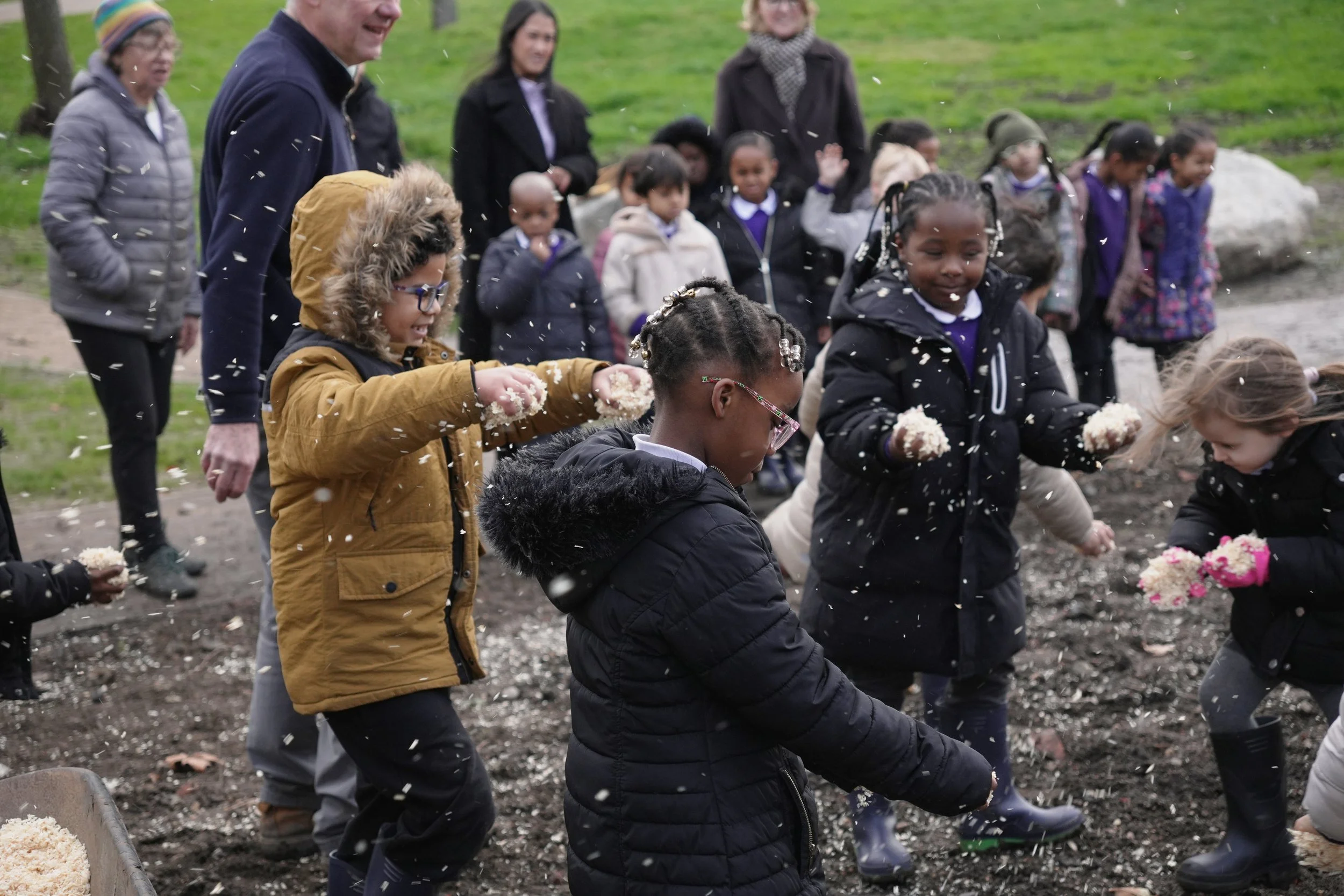
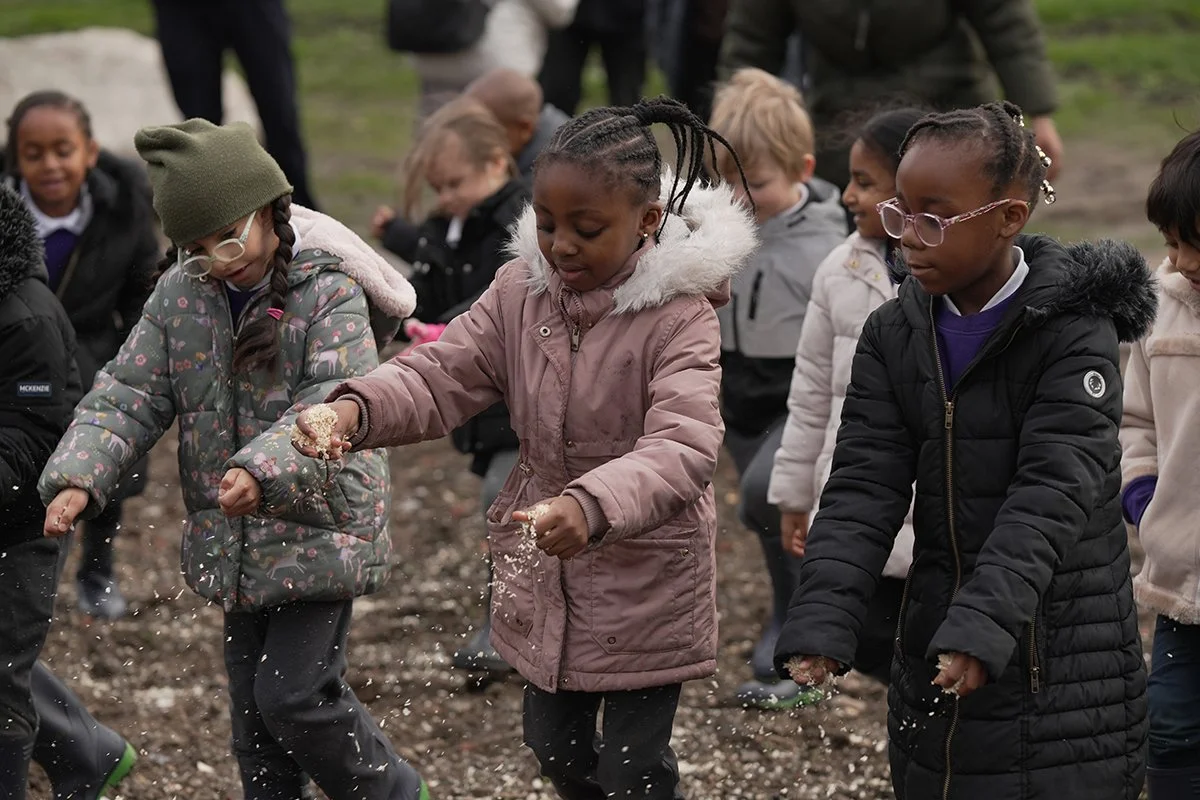
As the clouds once again parted and the sawdust and seeds settled we made our way across to the flag pole to raise the flag to a cheer.
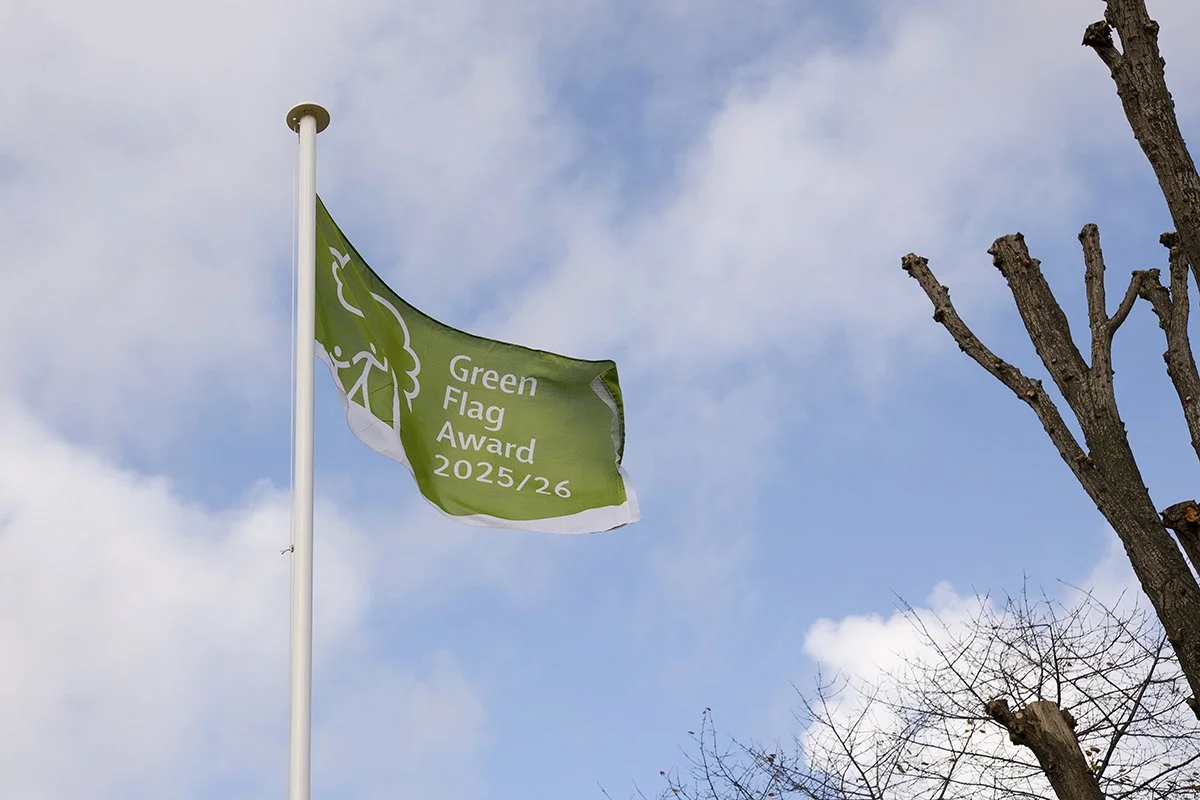
I’m rather proud of this photo…it was a windy day and it took me 20 shots to get.
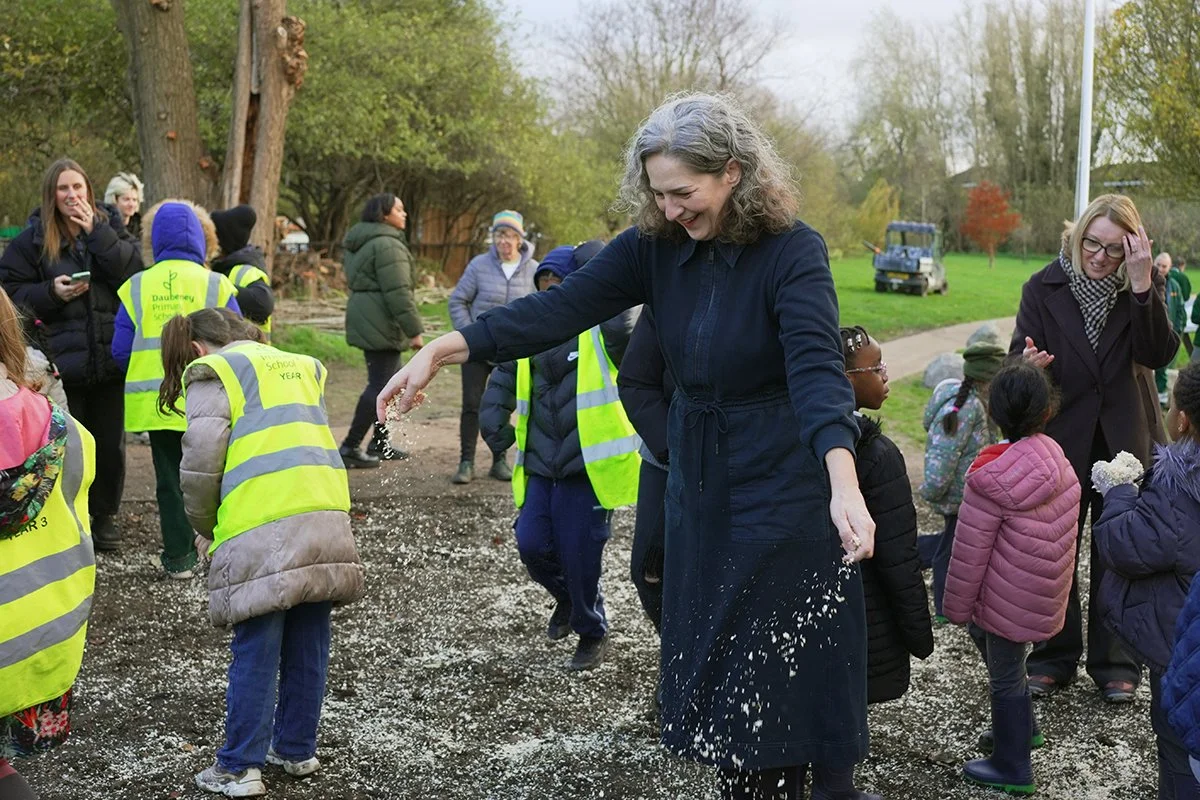
My Deputy Mayor and I were so impressed when we met with the schoolchildren! We asked them lots of questions about why it's important to make our parks accessible, beautiful and exciting places where they can enjoy nature and play. They knew all about planting seeds and showed us how it's done – we had a lot of fun! Thank you to everyone for making the day so cheerful, sunny and bright!
Caroline Woodley - Mayor of Hackney
Hackney has many progressive policies and achievements to be proud of. With 40% of the borough’s land having “green cover” it feels like it should be the beating heart of policy.
In May 2023 the Council adopted a borough-wide Climate Action Plan covering buildings, transport, consumption, adaptation and environmental quality, aiming to improve air quality, reduce emissions, and promote a green economy.
Hackney couples environmental ambition (net zero, climate action) with social justice (affordable housing, equality, inclusion), reflecting a “just transition” approach rather than green gentrification.
Preserving and improving green and public spaces is key for quality of life, community cohesion, environmental well-being, and ensuring development doesn’t come at cost of amenity or access to nature is often a tricky tightrope to traverse.
Use of developer contributions has funded improvements across many parks, open spaces and community amenities feels like a no brainer. You’ll be surprised/saddened/angry when you discover where “biodiversity net gain” is delivered. Spoiler : often hundreds of miles away.
The result of all this good work is that Hackney now has more Green Flag parks than any other borough in London. (Actually they share this claim with the City of Westminster)
Whilst we applaud and appreciate the wonderful work the council and the amazing parks team is doing the missing piece of the puzzle is the Hackney Community.
Without buy-in, enthusiasm, resilience and commitment from residents all the hard work local government is doing becomes as effective as a snow plow on a bicycle; you might eventually achieve your goals but you’ll be pushing harder than you really have the energy for.
The Daubeney Fields Story
History & Role
Daubeney Fields is a community park which serves two big housing estates (Kingsmead and Clapton Park) and a residential area of Victorian terraced housing. It is also a local site of importance for nature conservation.
Daubeney Fields Forever was established in 2014 as a park user group to help the council keep the park clean, safe and well-maintained, protecting and improving the natural environment and facilities. At the time facilities on Daubeney Fields had been neglected for many years.
A community consultation was carried out which identified 3 priorities (playground renovation, skate park restoration, pathways/entrance improvements).
Work began to raise the funds needed to improve Daubeney Fields and turn it into “a park with no borders.”
Timeline
2014-2016: Daubeney Fields Forever led environmental improvements: hedgerow planting, woodchip paths, litter picks, orchard care, put on summer fun days and raised funds to set up a community garden in an abandoned car park on Daubeney Road opposite the park.
2017: ecoACTIVE delivered Access to Nature - a one year National Lottery Heritage funded project to raise the profile of the park as a local site of importance for nature conservation and engage people in activities that helped them enjoy nature., develop their identification skills and increase their knowledge of local wildlife.
2018/19: Daubeney Fields Forever and ecoACTIVE partnered with Friends of the Earth on the 10x Greener innovation project to help residents, schools and early year’s settings green up streets around the park. The project featured in a BBC Wildlife documentary - Cities: Nature’s New Wild. The partners then crowdfunded to hire the UK’s first postcode gardener to support them - an initiative which has now been rolled out nationally.
To support 10xGreener, Hackney Council depaved two areas of pavement on Daubeney Road outside Daubeney Fields and then piloted the borough’s first glyphosate-free zone around the park. A year later an urban botanist identified 60+ wildflower species growing along Daubeney Road.
2019: A group of skaters - Hackney Bumps - got together to start regenerating the park’s decaying 1970s skate park. Over the years they have put in hundreds of hours of voluntary work to create one of the coolest ‘retro’ skate parks in the country, attracting both local boys and girls and internationally renowned skaters alike. Their work continues to this day.
2020: After five years fundraising, the park’s bleak and dilapidated early years playground was transformed into an imaginative natural playscape - with a wooden fort, logs, hills, hedgerow, sand pit and other natural elements.
2021: 58 beautiful Sakura cherry blossom trees were planted in the park by Tree Musketeers - a gift from the Japan-British Society to mark the friendship between the two countries. The trees, along with the park’s community orchard and other trees in the park, are cared for by the local volunteers from Clapton Green Gym.
2022: Following further fundraising, four of the park’s six entrances were opened up. Railings were replaced with boulders and hard boundaries disappeared to allow the park to flow out naturally into the greened up streets, estates and gardens around it.
2022: ecoACTIVE and Daubeney Fields Forever set up an intergenerational Walking and Gardening Club. A new postcode gardener engaged local schoolchildren, families and residents to create wildflower meadow areas in the park. The Sport England funded gardening programme was part of the council’s Kings Park Moving Together programme to encourage residents to be more active. An ecological survey found the restored meadow plots had 22× more insect diversity than the mown grass around them.
2024: ecoACTIVE launched the Hackney Buzzline, a 4 km pollinator corridor linking Daubeney Fields to neighbouring parks. A large butterfly meadow was created in the park for the Hackney Buzzline with the support of the council and the charity Butterfly Conservation and sown by children from Kingsmead school in the park.
2025: Hackney Council delivered a major restoration project which included a new path circuit around the park, an outdoor gym, and further improvements to the entrances, skate park and adventure playground. The Hackney Buzzline community ecologist worked closely with the council’s biodiversity officer and parks team to sow new wildflower meadows next to the paths, including the borough’s first chalk-like meadow and to create a 12 m long bee bank - Hackney’s biggest created nesting resource for ground nesting bees. Meanwhile the Buzzline’s postcode gardener worked with volunteers to create a pollinator flower bed outside the Clapton Park Children’s Centre opposite the park, bordered by a low willow-woven fence - creating a new nature gateway to Hackney Marshes. Local residents crowdfunded to commission artist Arthoppers to paint a mural on the Children’s Centre fence, showing pollinators visiting wildflowers and reflecting the real meadows established on the park.