
The Hackney Buzz - Hackney Buzzline News Jan 2026
This new year edition of The Hackney Buzz celebrates how people, places and pollinators are coming together along The Hackney Buzzline. From new meadows and bee banks to children learning about wildlife, volunteers, schools, residents and partners have been helping transform parks, estates and community spaces into vibrant corridors for nature.
You’ll find stories of regeneration, hands-on conservation, inspiring partnerships, and the growing evidence that our efforts are working. Thank you to everyone who’s played a part, and if you’re new to the Buzzline, we hope you feel inspired to join in. Nature thrives when communities do, too.
Daubeney Fields
Hackney Council has regenerated Daubeney Fields to improve sports facilities and make the park more welcoming and accessible. Contractors laid new paths and remodelled the Lea canal entrance over autumn, linking local communities and encouraging people to walk and cycle through the space. The works provided a golden opportunity to work with the council to create new pollinator habitats on the Hackney Buzzline.
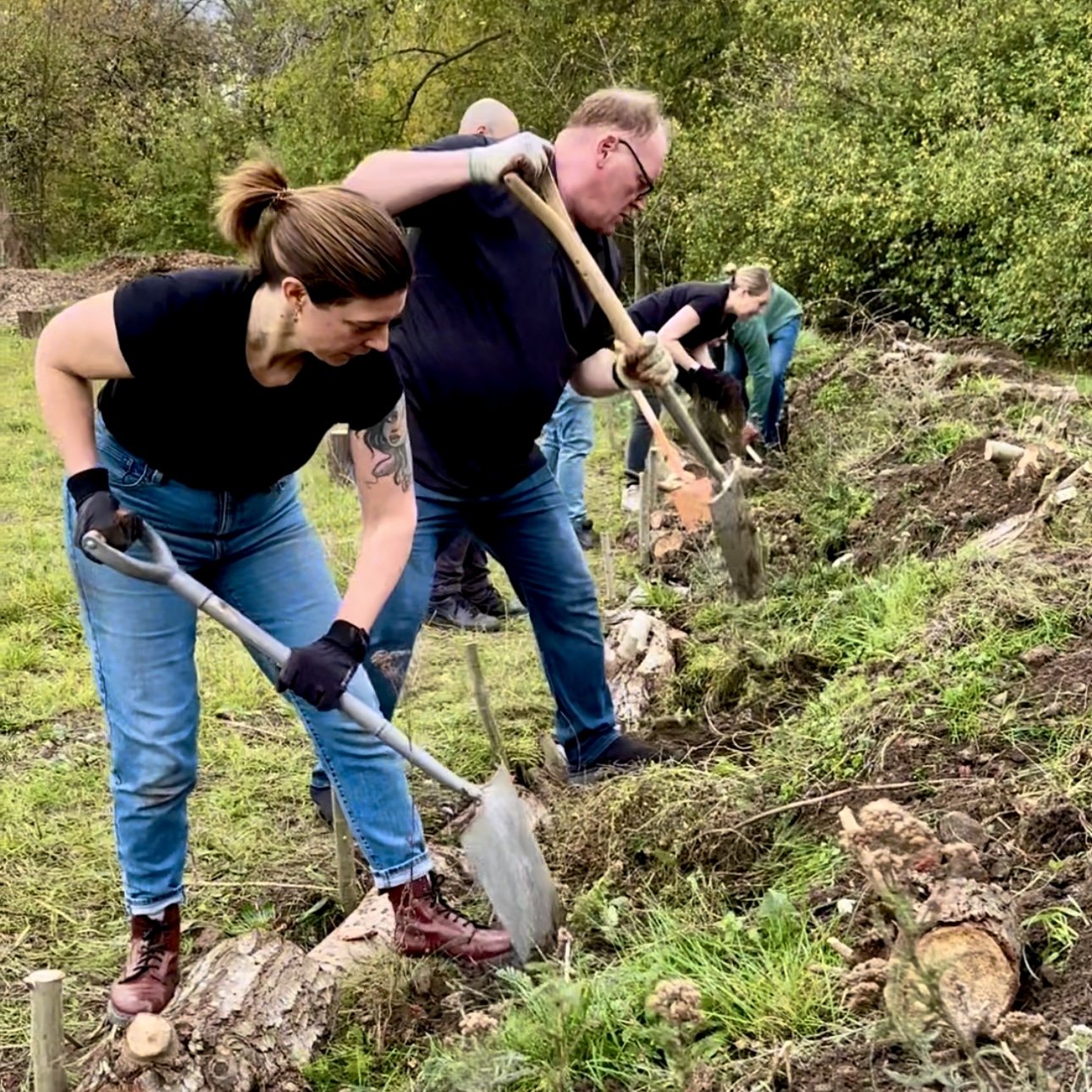
Hiscox Insurance volunteers helped kick things off with a deep clean of the park, filling 30 bin bags with litter. They returned to build a bee bank next to a wildflower meadow established the year before with Butterfly Conservation. We made the bank using sandy loam, logs and hard core for ground-nesting bee species. At 12 m long, it is Hackney’s biggest bee bank. Together with the meadow, it provides a premium pollinator ‘bed and breakfast’ spot.
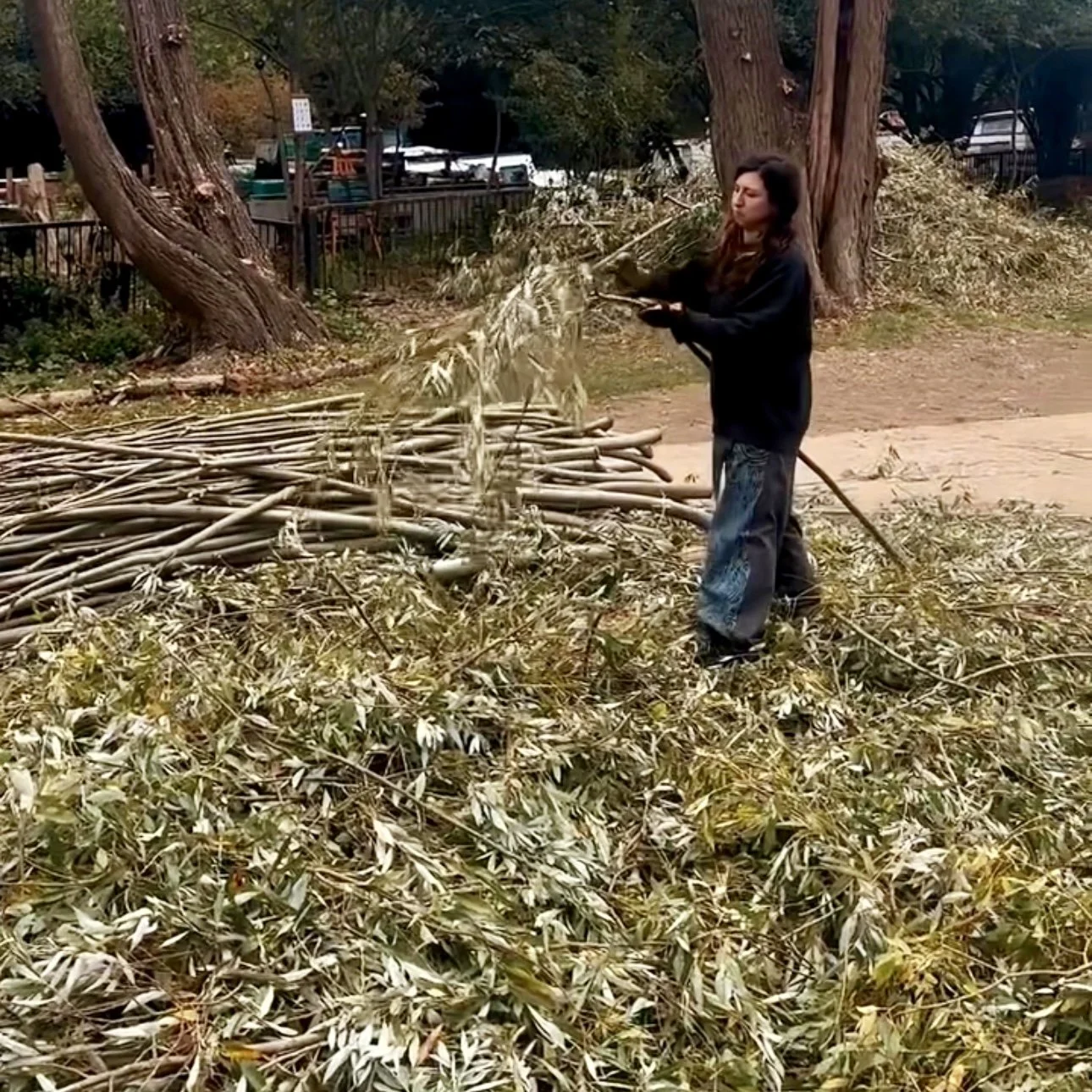
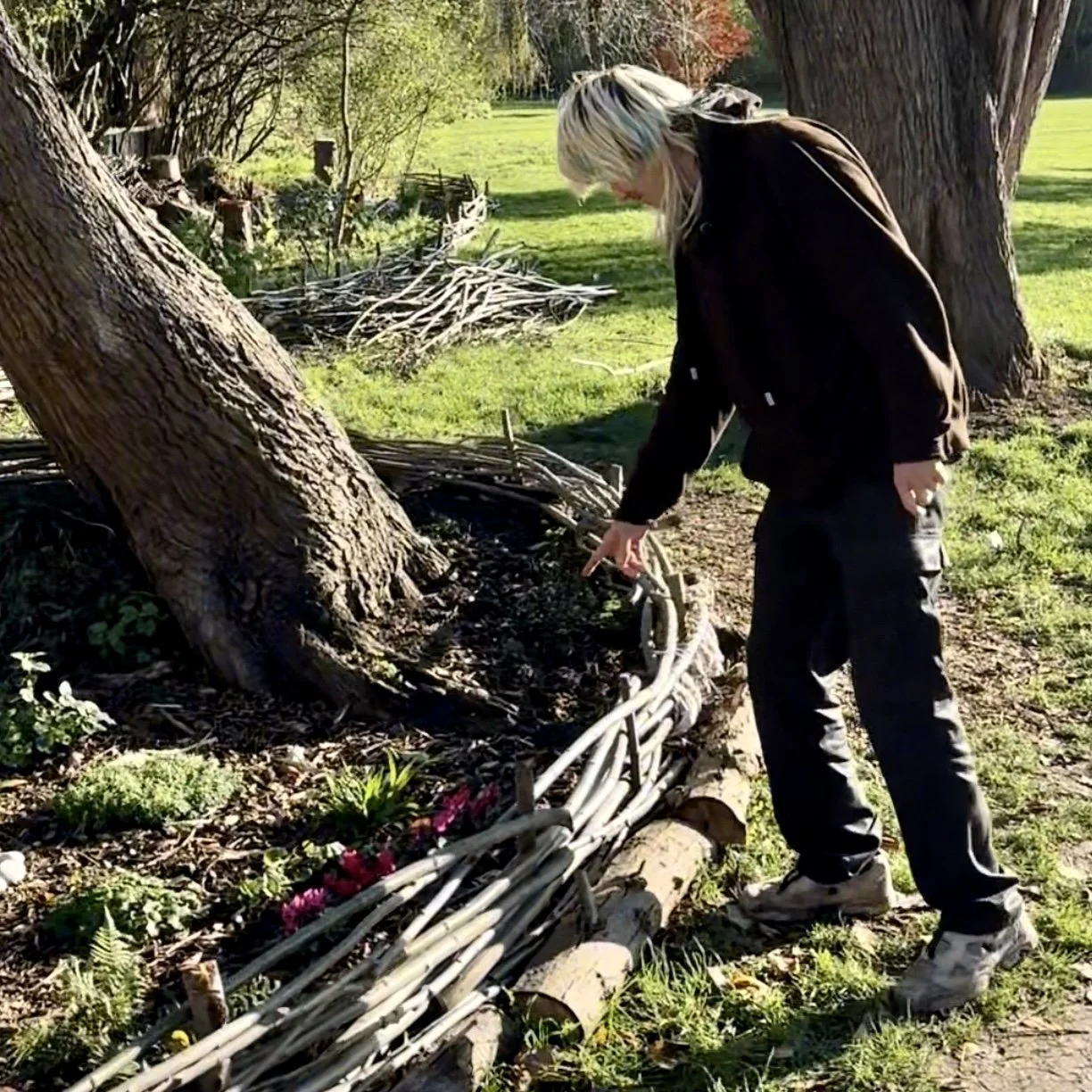
Tree surgeons then thinned the copses around the park. We recycled the cut-down wood to create new wildlife habitats on site. Clapton Green Gym volunteers mulched the park’s Sakura blossom cherry trees with woodchip. Other volunteers collected logs to build the bee bank, diversify the park’s meadows, and create an invertebrate loggery. We gathered branches from a pollarded willow tree to make a woven fence for a project opposite the park .
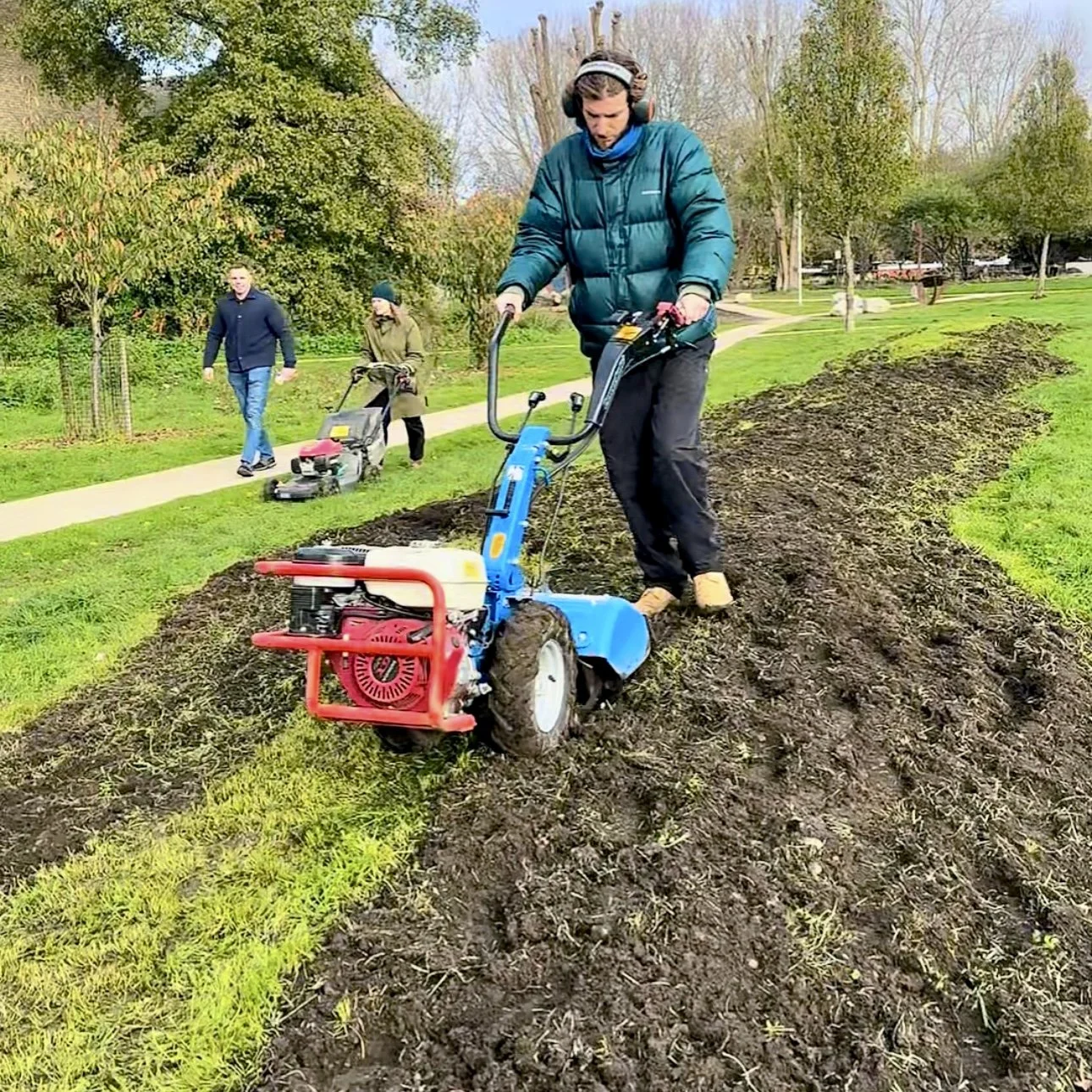
Contractors took left-over spoil from the construction works to construct low earth mounds running 100 m beside the path opposite the butterfly meadow. Haringey Council’s parks team came to visit and help rotavate the ground. Volunteers then sowed a tailored mix of tussock grasses and wildflowers which we’ve found to establish in parks and are preferred by our local pollinators. The hard concrete path will disappear into the meadow when the wildflowers grow this year.
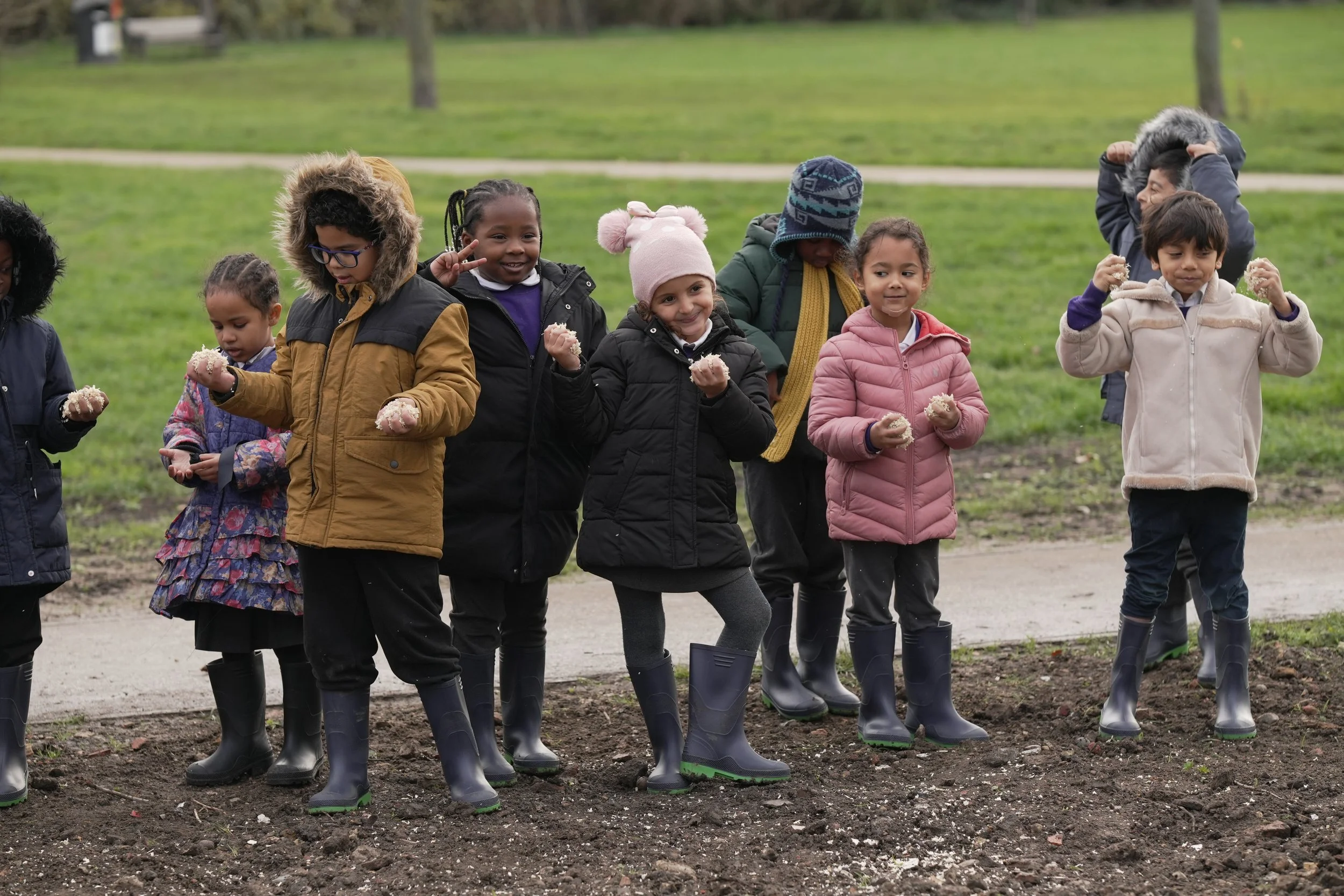
Children from Daubeney and Kingsmead Schools and the Clapton Park Children’s Centre sowed Hackney’s first-ever chalk meadow at the park’s canal entrance. These meadows provide a special habitat. Council biodiversity officer Cassandra Li suggested we make ours by sowing a chalk meadow seed mix onto a subsoil mixed with building aggregate. This mimics the alkaline nature of chalk and provides a sustainable alternative to importing it. Local boater Dimitri added the finishing touches by laying a woodchip path through the meadow and creating a wildlife garden next to his mooring.
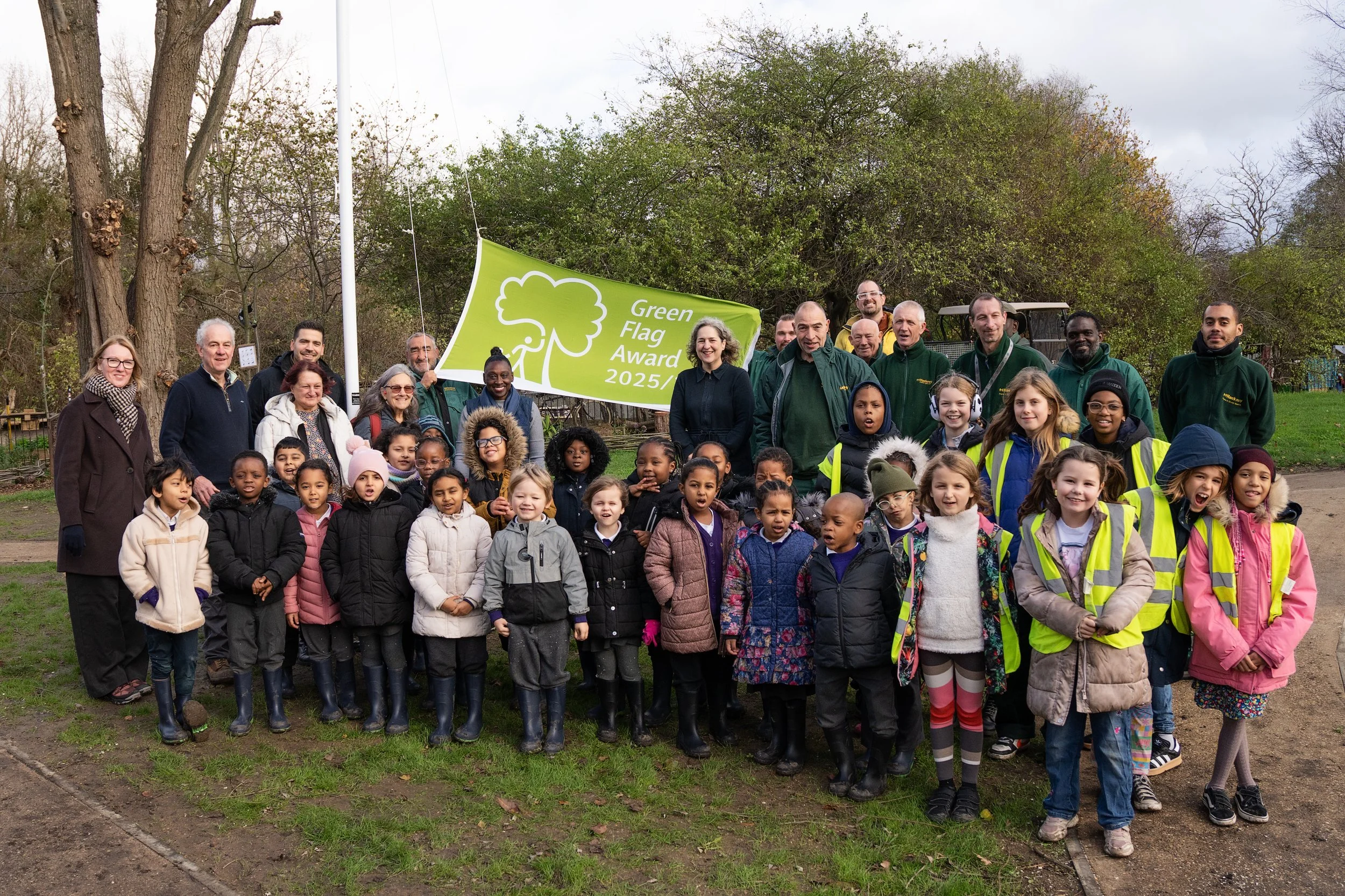
Before Christmas, Mayor Caroline Woodley, Deputy Mayor Anntoinette Bramble, ward councillors, and the council parks team raised the park’s Green Flag for the first time. The Green Flag, awarded to Daubeney Fields in summer, is an international benchmark for well-managed, biodiverse public spaces.
Clapton Park
From Daubeney Fields, the Hackney Buzzline moves on through the Clapton Park Estate. The Clapton Park Children’s Centre nestles next to a footbridge which crosses the Lea navigation canal to Hackney Marshes. There we are creating a new nature gateway to an area of Metropolitan Importance for Nature Conservation.
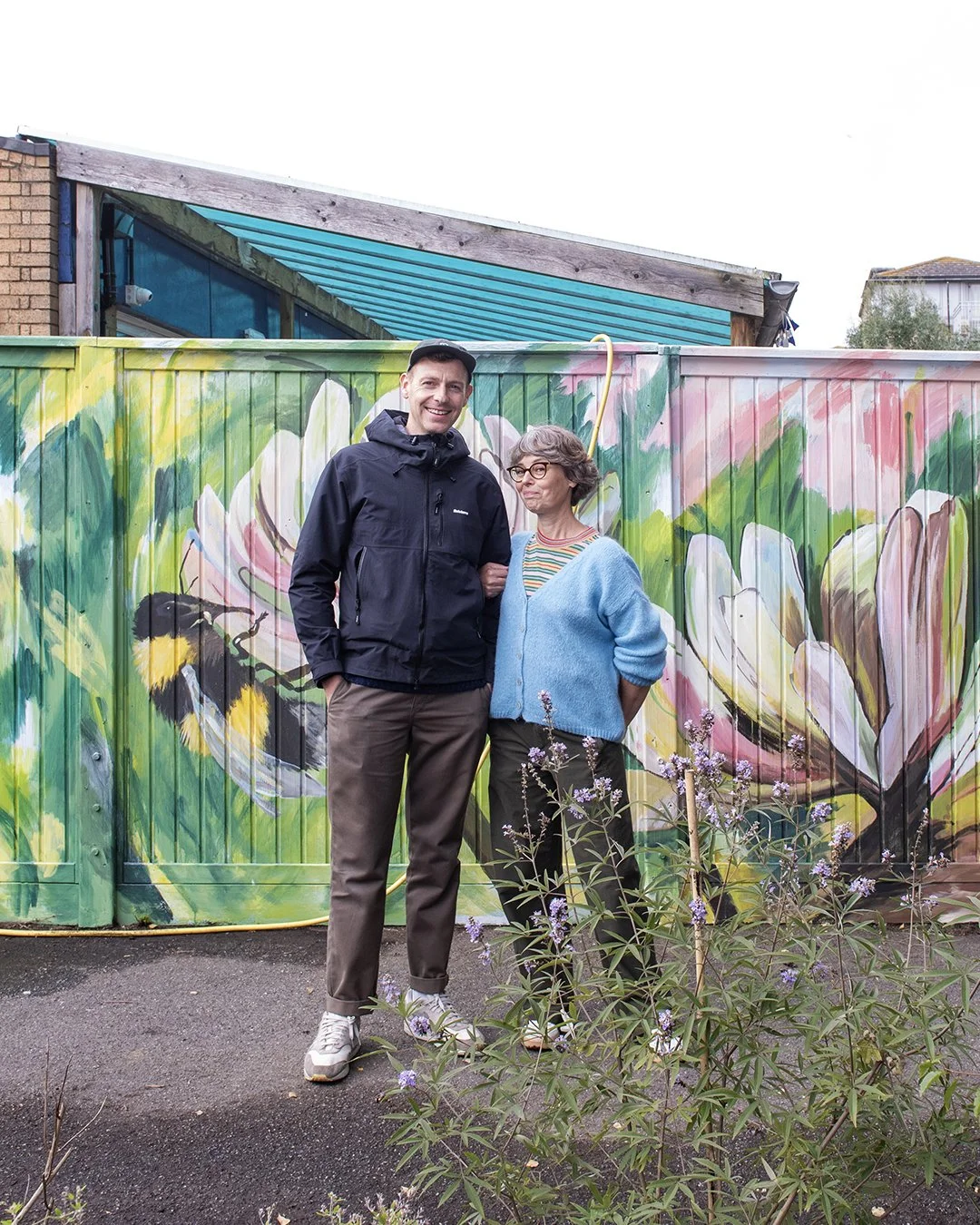
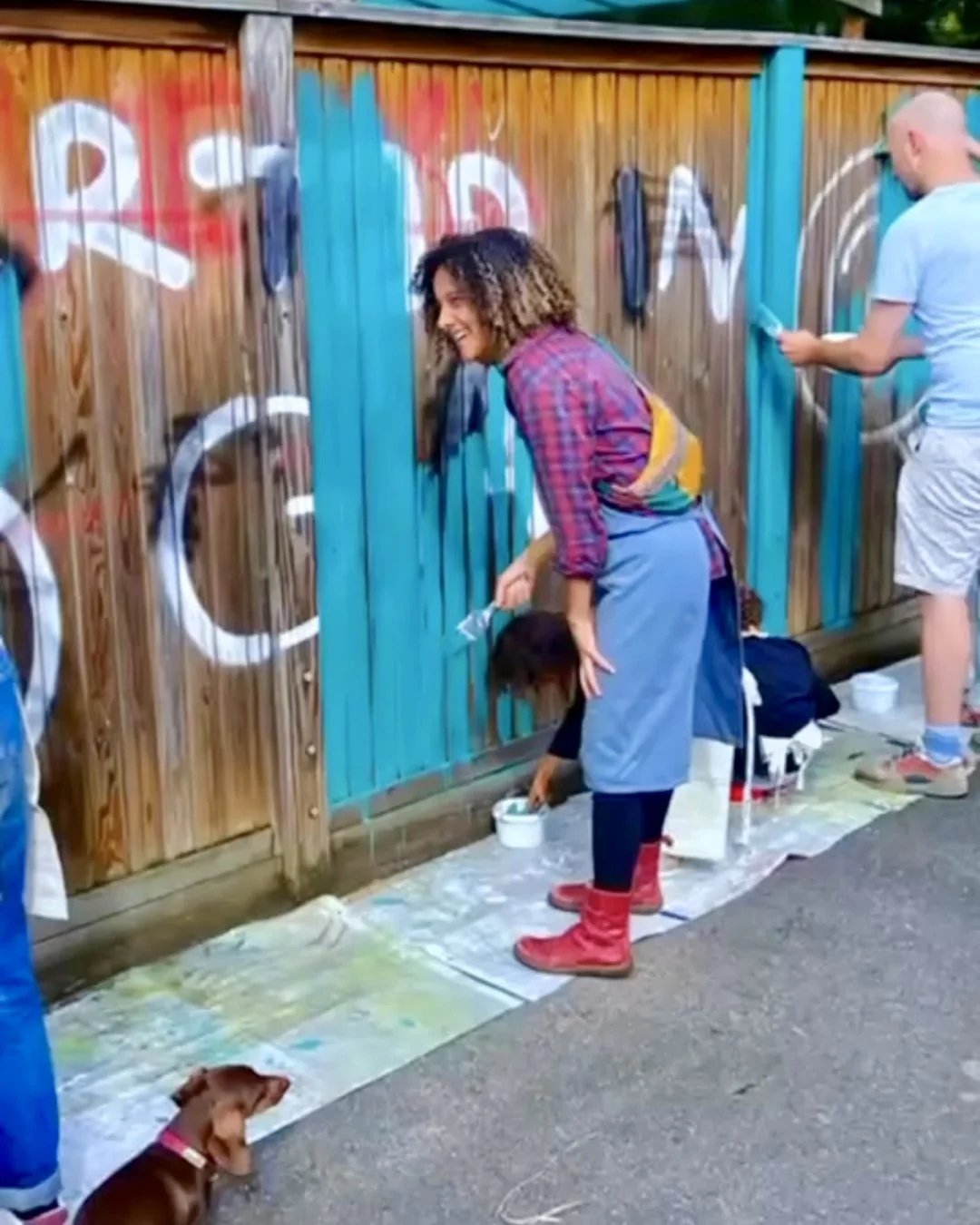
We worked with residents and volunteers to revitalise a neglected and rubbish-filled plant bed outside the Centre and replace ugly graffiti covering its fence. Over summer, Adam, a Children’s Centre parent, led a successful crowdfunding campaign to paint a mural inspired by the Hackney Buzzline. Adam commissioned Claire from Hackney-based art education body Art Hoppers to design a meadow picture alive with bees, moths and butterflies.
Members of the community painted over the graffiti. Buzzline manager and ecologist Gerry advised on plants and pollinator in local park meadows to include in the painting. Children from the Centre chose the ones they wanted to see. Over two weeks, Claire painted the meadow in a free, impressionist style. Her beautiful images imagine what a meadow looksike in the eyes of a child.
Meanwhile, Buzzline postcode gardener Rachael began turning the depleted plant bed next to the fence into a pollinator paradise. Hiscox volunteers removed a rotten kick rail around the bed and pulled out a ‘weed membrane’ that was inhibiting plant growth. Hackney Buzzline volunteers added shade-tolerant and sun-loving, low-maintenance plants like Woodland Sage, Cranesbills, Echiums and Buddleja for bees and butterflies.
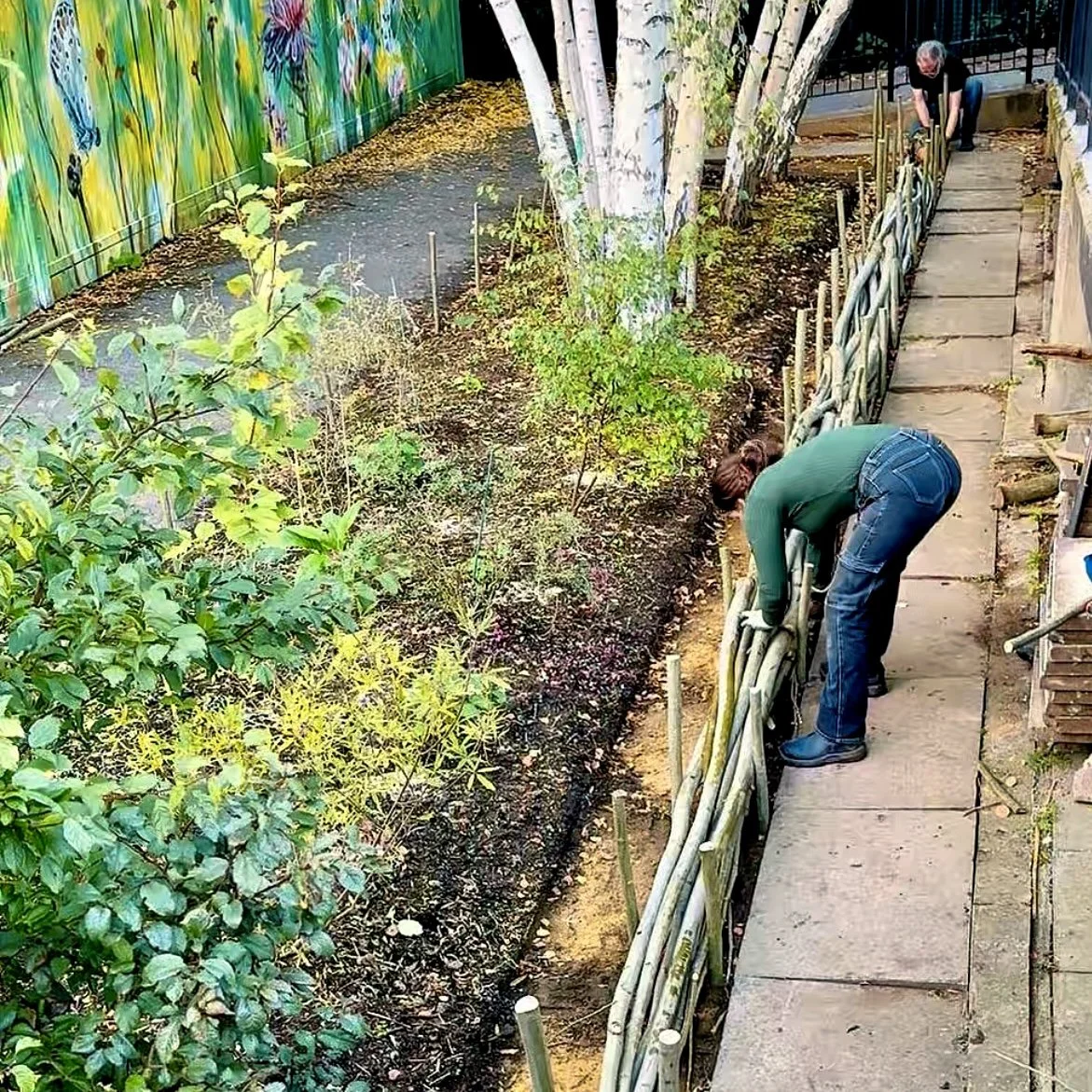
London National Park City gave funding to replace the rotten kick rail with a low natural fence. John, a local dead-hedge expert, crafted a beautiful, robust, and sustainable structure by weaving willow branches between perimeter stakes. Rachael added rusted steel planters next to the mural to take climbing honeysuckle and dog rose. The plants will trail along horticultural wires, gently integrating nature and art.
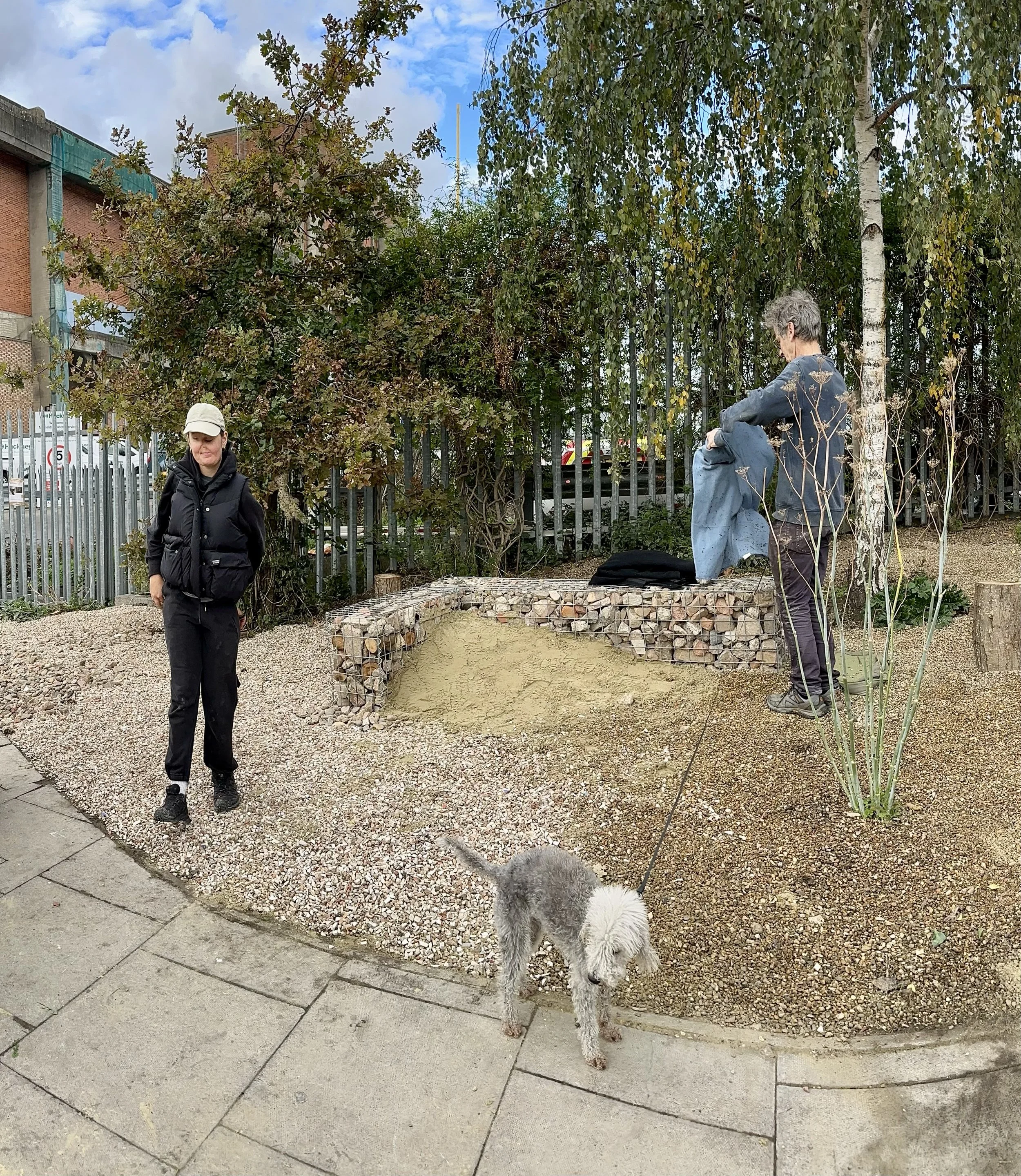
Further into the Clapton Park Estate we converted a roadside verge into a new pollinator pit stop. Opposite the Hackney School of Food, where Mandeville Street turns into Millfields Road, lies a sunny pavement plot known as Costa del Clapton. Over autumn, Buzzline volunteers helped Rachael enhance this for nature. They enriched the soil to retain moisture, added rubble to improve drainage, and put in logs and gabion walls to enhance habitat diversity. They also built a walled sandy bee bank and planted a selection of drought-tolerant, pollinator-friendly Mediterranean plants.
We’ve now partnered with local charity Natural Neighbours to keep our new pollinator habitats on the Estate in good condition. Natural Neighbours volunteers will help water the beds, remove litter, and thin out self-seeding plants with little pollinator value or which outcompete ornamental varieties.
Pollinator Training
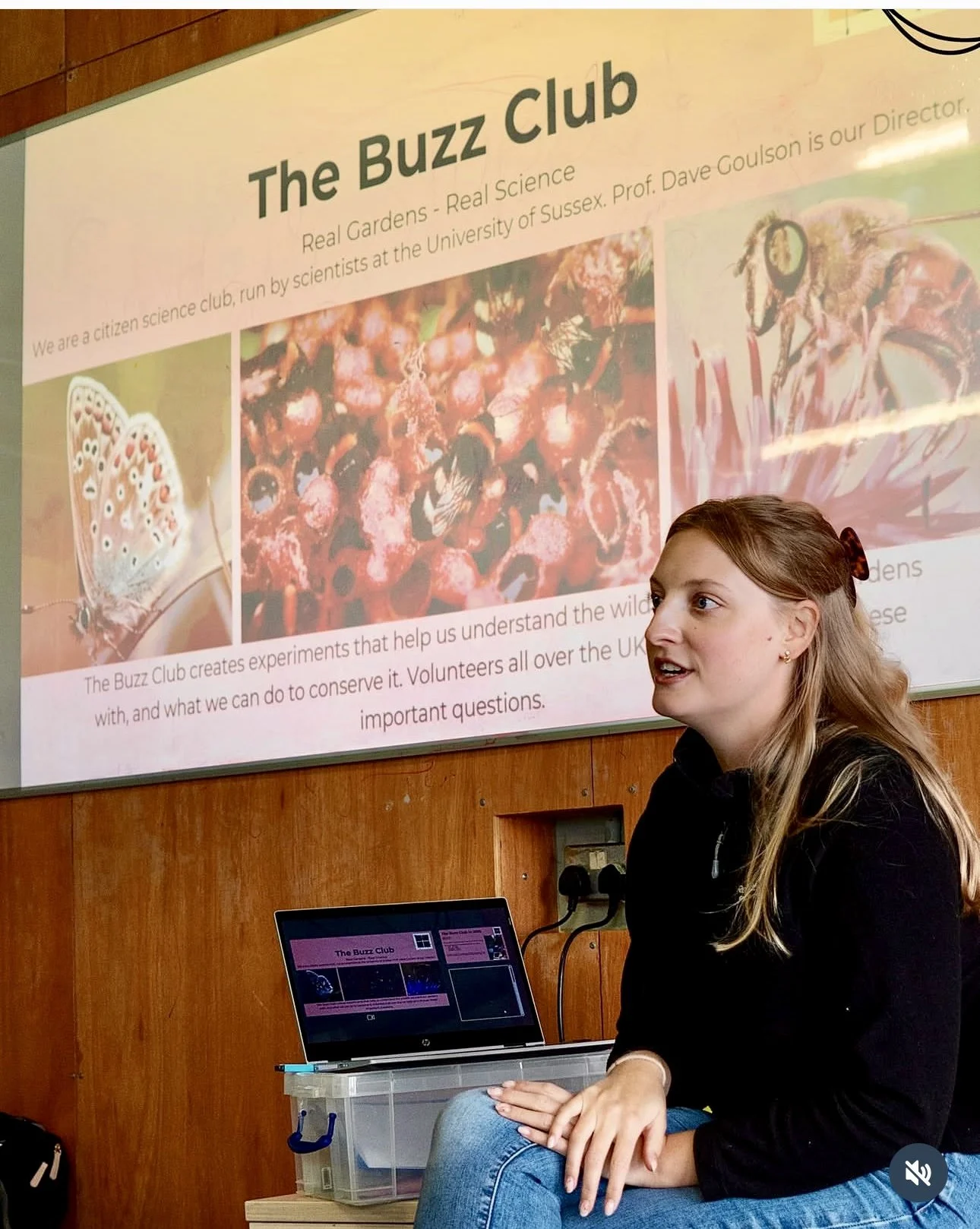
Issy Sexton from the Sussex University Buzz Club hosted a citizen science pollinator training day for Buzzline volunteers at Hackney’s Leaside Trust, near Springfield Park. Issy taught the volunteers how to identify 20 local bee species and construct three types of pollinator habitat resource – bee hotels, hoverfly lagoons, and bug bunkers. We carried out each activity using household materials that can be replicated in any educational or citizen science session.
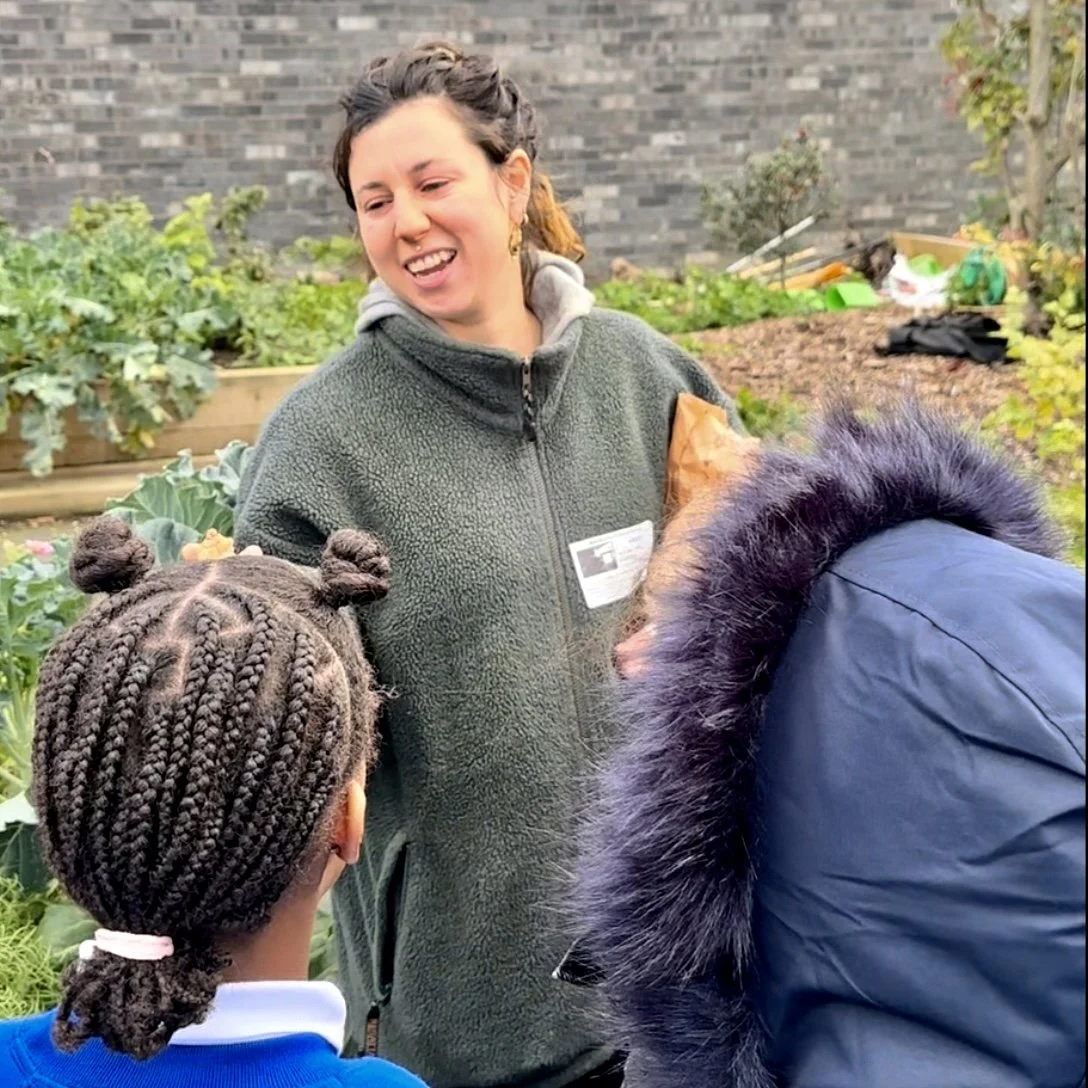
We’re now piloting a primary school pollinator course on the Hackney Buzzline, supported by the John Lewis Partnership Nature Fund. In summer, we delivered classes at Kingsmead, Mandeville, and Nightingale schools and took children out of the classroom to identify bees, hoverflies and other pollinators in park meadows. Last term, we taught schoolchildren how to plant for pollinators. The Kingsmead pupils sowed wildflowers alongside school railings, the Mandeville children created a pollinator corner in a planter, and the Nightingale pupils planted a pollinator rooftop garden. We’ll install bee nesting boxes next to these habitat areas this term. They’re designed so children can see the bees nesting within them.
Pollinator Monitoring
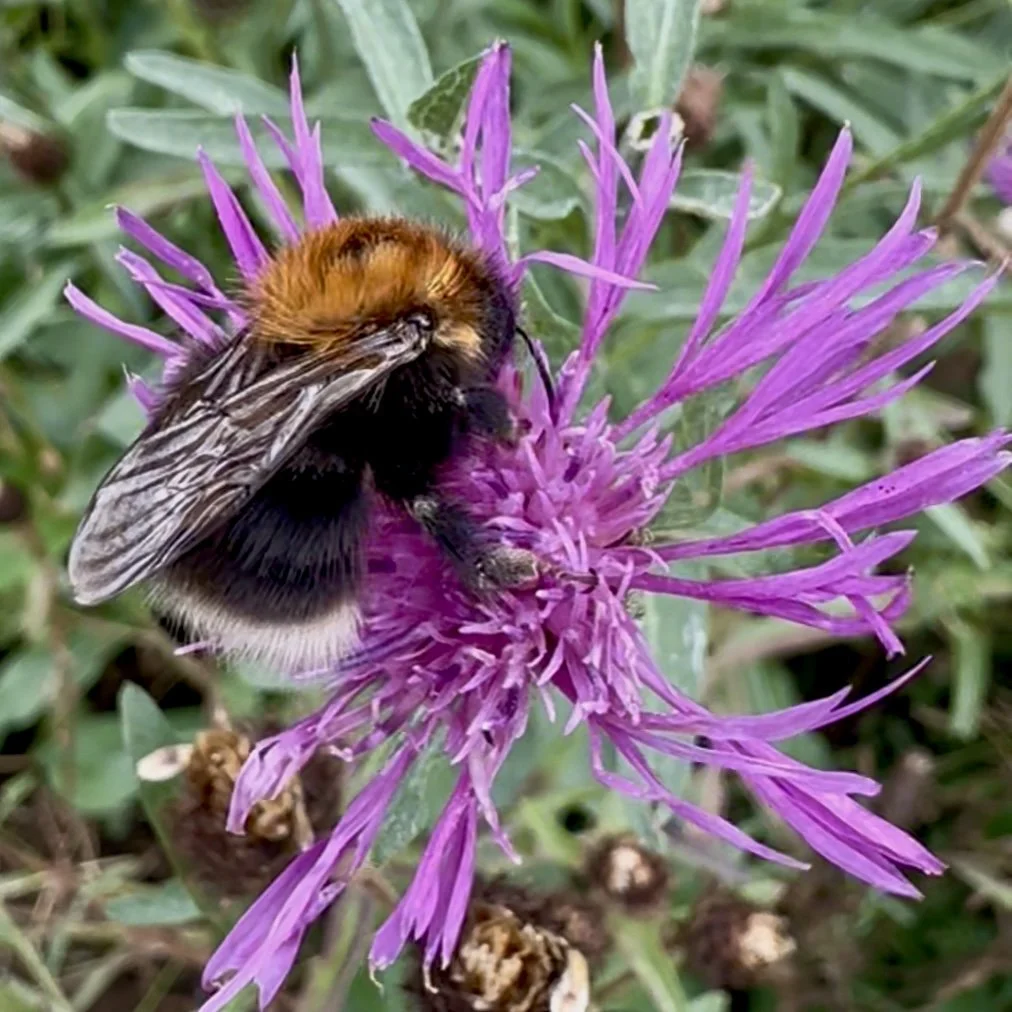
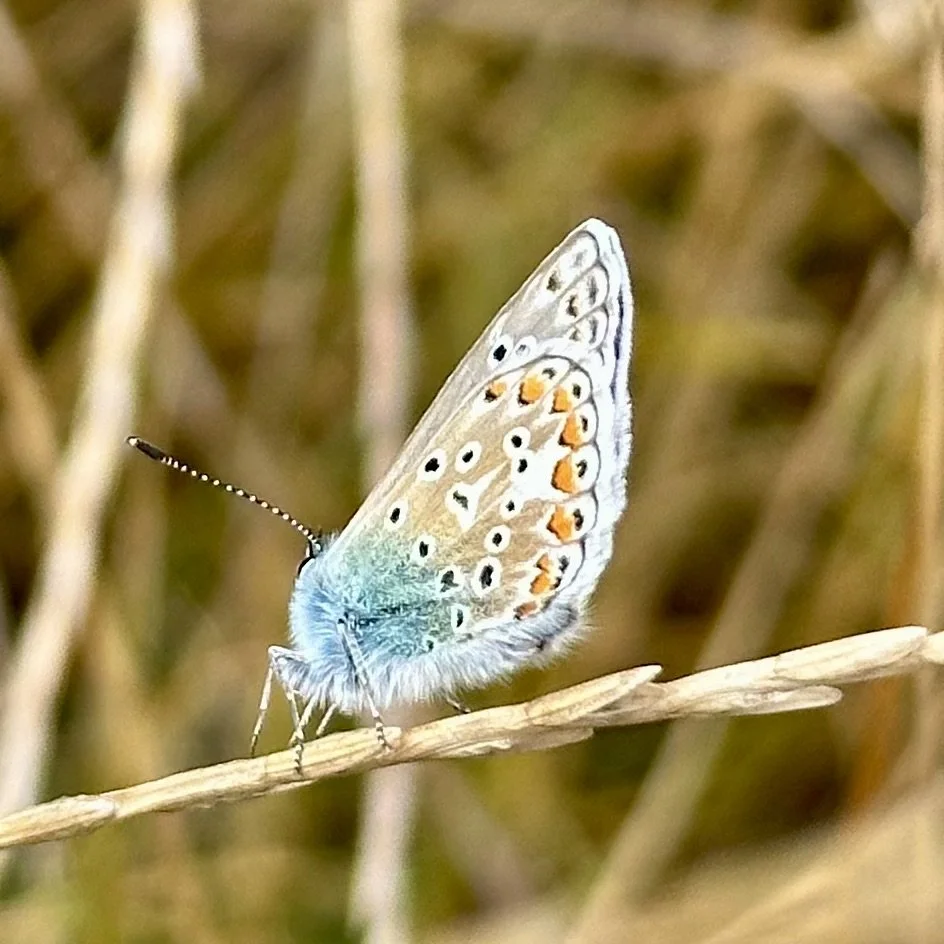
We’re building an extraordinary picture of pollinator biodiversity on the Hackney Buzzline. Over the last two years we’ve conducted 320 weekly transect surveys on Buzzline parks and housing estates, identifying over 170 local species. We’ve recorded 21 butterfly species, nine bumblebee species and 35 solitary bee species, including mining bees, mason bees, flower bees and leafcutter bees. We’ve also discovered over 100 species of moths, wasps, sawflies, hoverflies, and other flower-visiting insects.
This summer we started recording pollinators visiting the Buzzline’s flower beds, planters, gardens and meadows. We’ve seen over 40 species foraging in them - so we know our pollinator pit stops are supporting at least one in four of the species recorded along the Buzzline. Different species show clear preferences for different flower varieties that we’ve planted.
We’ill use these insights to refine our planting choices this year and share a list of the plants we have found best support each local pollinator species.
University College London
The Hackney Buzzline generated a buzz of excitement after Gerry and Rachael gave a talk at the UCL People and Nature Lab last month. Their Connecting Nature, Connecting People seminar looked at how to connect wildlife gardening efforts across neighbourhoods. It also explored ways of reimagining garden beauty through a biodiversity viewpoint rather than how ‘neat and tidy’ they are.
This year, ecology students participating in the UCL NatureSmart Challenge will help us develop ways to engage the wider community in pollinator-friendly action. They’ll research how we can best support schools, community gardeners, residents and others to create habitats and monitor the pollinators which use them.
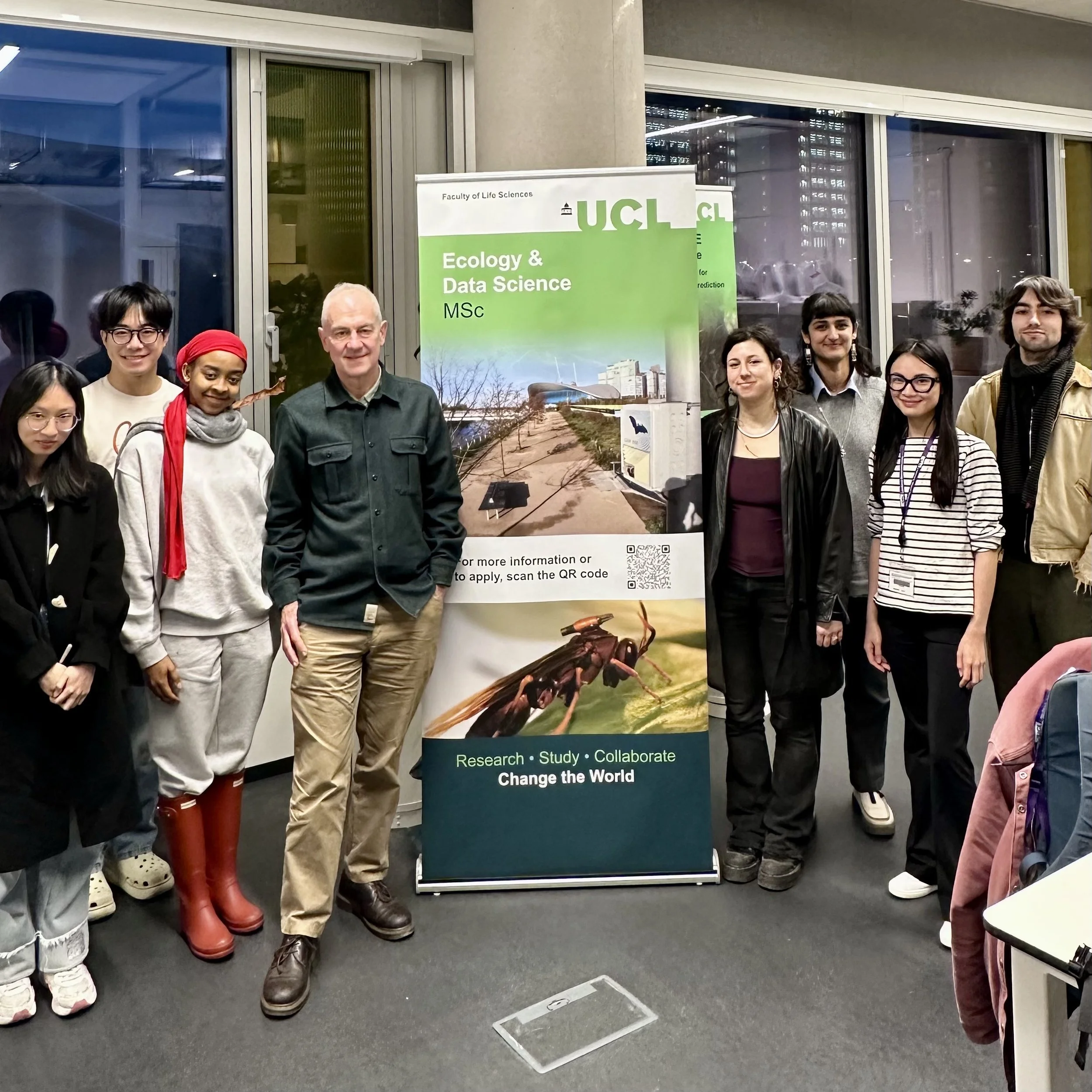
The Hackney Buzzline team with UCL students
London Local Nature Recovery Strategy
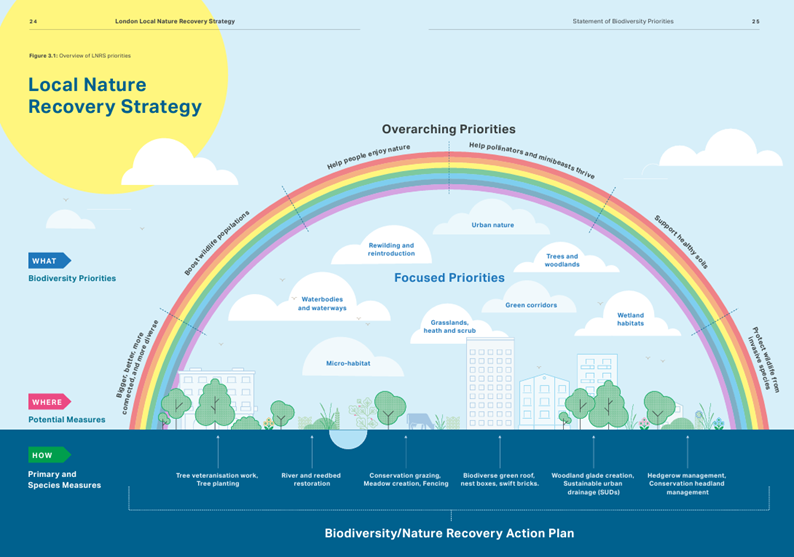
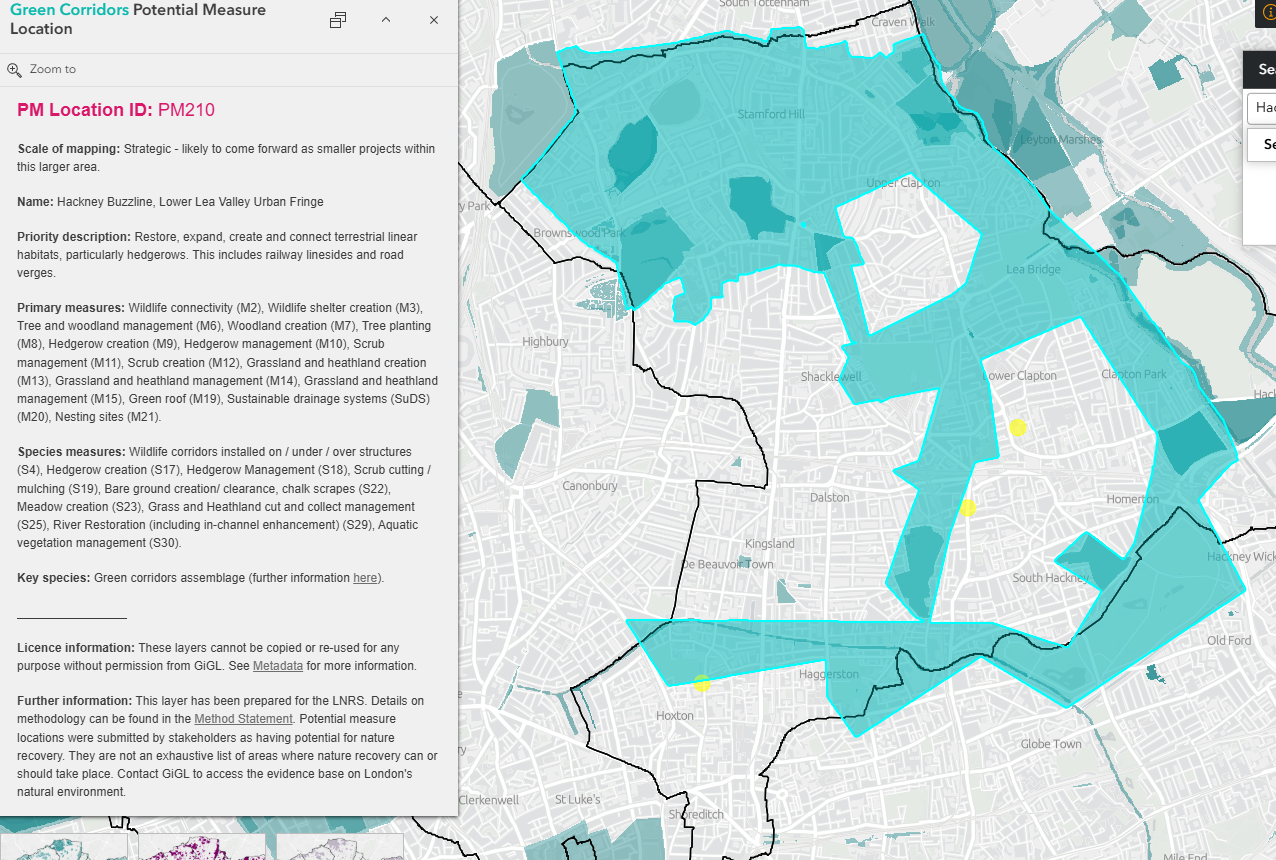
The Hackney Buzzline is included as a strategic priority area in the new London Local Nature Recovery Strategy. It forms part of a larger green corridor called the Hackney Buzzline, Lower Lea Valley Urban Fringe, extending deeper into the borough. The GLA strategy, put out for consultation in autumn, includes ‘pollinators and minibeasts’ as an overarching priority for the city. The final strategy will be published this year and will set the framework for a range of green corridor projects to create habitats in Hackney’s parks, along railway lines and road verges, and elsewhere.
Hackney Buzzline Community Map
We’re delighted to welcome the Leaside wildlife garden as the newest member of the Hackney Buzzline Community Map. The garden was built on a shoestring budget at the Leaside community boating centre near Springfield Park.
Volunteers took up two areas of concrete, covered the rest with woodchip and built raised planters around the garden edge. Sunny beds were filled with free-draining soil and drought-tolerant plants and shady beds got richer soil and woodland edge varieties. Log piles, a pond, sandy bee mounds and a bee hotel now support amphibians, reptiles, mammals and pollinators. A regular gardening group keeps the garden in good shape for people and wildlife.
You can add your space to the Hackney Buzzline Community Map by sending us a photo and a short description of what you’ve planted.

Kampala Buzzline
Big congratulations to Hannington Sserwanga who has won a major award for setting up a sister Kampala Buzzline project in Uganda. The World Wildlife Fund/MTN PachiPanda Challenge is an initiative which empowers young African entrepreneurs to develop innovative solutions for local environmental challenges. Hannington has put pollinator conservation onto the political and public agenda in Uganda. In October, he mobilised hundreds of people to take part in the world’s first-ever Bee Run in Kampala. He’s now setting up a plant nursery to grow pollinator-friendly plants for the Kampala Buzzline.
Hannington will go to South Africa next month to represent Uganda at the Africa PachiPanda final.


Get Involved
In 2026 we will:
Start five new projects on Hackney Buzzline parks and housing estates, funded by the National Lottery Heritage Fund.
Extend the Buzzline 1 km up to the beautiful wildlife garden run by Core Landscapes behind St Barnabas Church on Homerton High Street.
Deliver our third pollinator course for primary school children on the Buzzline.
Train volunteers in ecoACTIVE’s community garden network in pollinator gardening, supported by the Bupa Foundation.
Run four training sessions for Hackney Council Housing staff in pollinator-friendly grounds maintenance.
Hold two nature recovery events for community gardeners, wildlife gardeners, park friend groups, and environmental bodies across Hackney
We’d like to thank the hundreds of volunteers who have helped build the Hackney Buzzline over the last two years. The Buzzline is a shared endeavour – a celebration of nature and community spirit. If you’d like to get involved please join our Hackney Buzzline volunteering group
Together, we’re building a thriving corridor for pollinators — thank you for being part of this movement! 🦋